How Nvidia used a "scorched earth, adversarial attitude" targeting proponents of export controls in DC, invoking Trump's name to get license approvals expedited (Semafor)
⚡ Executive Summary & Key Facts
- [Core Event] Tim Teter (Nvidia General Counsel), Bureau of Industry and Security (BIS): Lobbied to ease license conditions for H200 exports by opposing cloud-customer disclosure and raising KYC compliance thresholds
- [Root Cause & Mechanism] To minimize compliance burden and maintain market access for high-end computing products in China
- [Key Metrics] Companies tied to Alice Huang, the suspected Chinese spy, have purchased at least $7.
- [Key Position & Outlook] Deep industry lobbying into export control regulatory details is redefining global compliance standards.
🤖 AI Radar Technical Deep-Dive
This incident exposes the high degree of institutional permeability between leading chip firms and U.S. export control mechanisms, where Nvidia attempted to secure 'customized regulatory exemptions' by linking commercial interests to political leverage. It signals a shift where semiconductor giants are no longer passive compliance actors but active participants in redefining the technological boundaries of global security policy.
📰 Full In-Depth Coverage
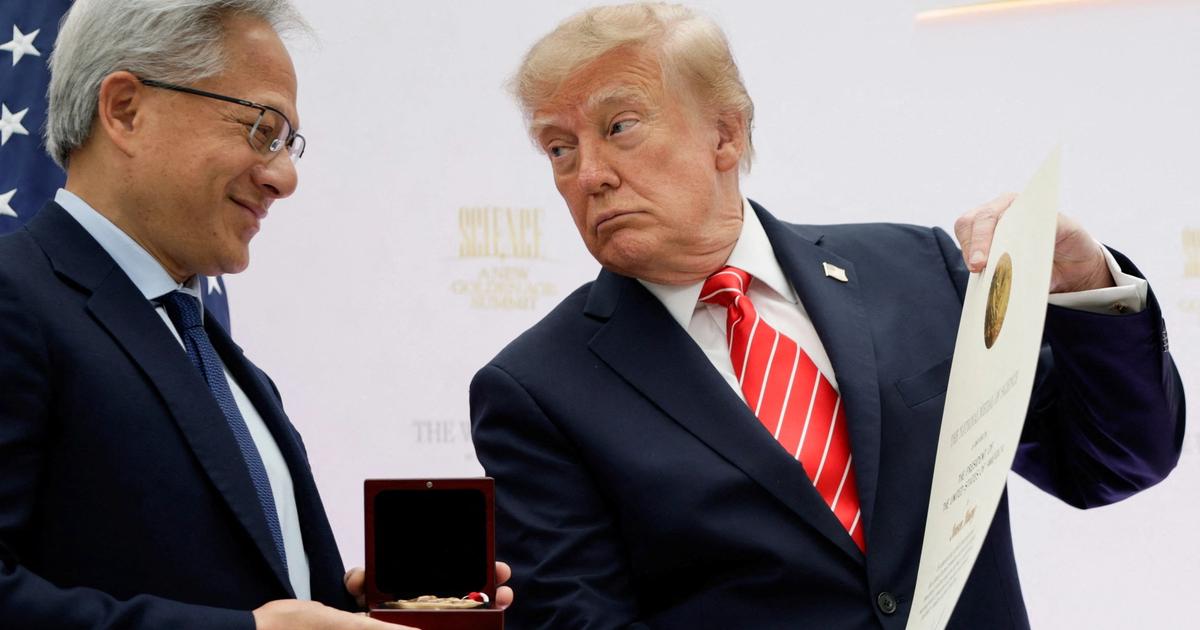
Semafor Full ReportIn January, the general counsel for what was then the world’s most valuable company delivered a blunt directive on chip export controls to more than a dozen government officials: What Donald Trump and his friend Jensen Huang want, goes.
“I was with the president when he and Jensen discussed this so I want to let you know what the president wanted,” said Nvidia’s Tim Teter, according to people with access to a detailed account of the call. “He wants this to go fast.”
At issue were proposed conditions on licenses to export Nvidia’s H200 chips to China, which included requirements that chipsellers know who their cloud customers were before shipping and conduct know-your-customer checks on any buyers purchasing more than a few thousand chips.
Nvidia objected, with Teter calling the cloud-customer requirement a “poison pill” for the company, the people said. Nvidia also wanted the threshold for the know-your-customer checks to be in the tens of thousands (the equivalent of billions of dollars of chips) and pushed for end-of-life conditions to only apply to chips that were facing export controls. While it’s not unusual for big corporations to work with US government agencies and Congressional staffers on legislation or agency rulemaking, or even to see draft regulation in advance, people familiar with Nvidia and its former CEO’s Washington connections say the chipmaker wielded an unprecedented level of influence in shaping guidelines with far-reaching global security and business implications for the entire industry. The previously unreported discussions have only taken on greater significance since Huang stepped down from the company he co-founded decades ago after media reports of extramarital affairs with two subordinates and one with a customer and suspected Chinese spy.
Nvidia declined to comment. Spokespeople for the White House didn’t immediately respond to requests for comment.
A spokesperson for the Bureau of Industry and Security, which is housed within the Department of Commerce, said it was “completely routine” for the department and other agencies to work with individual companies in this manner and that “often the conditions change in response to legitimate commercial considerations” raised by corporations. The final version of all license conditions are reviewed by the state, defense, energy, and commerce departments.“Nvidia would have gone through the same process for license conditions as any other license applicant. Nvidia consulting with non-political experts at multiple US government agencies regarding its proposed changes to the conditions is consistent with standard practice,” the spokesperson said.
If Trump was Huang’s friend in the White House, Teter was his muscle in Washington. After more than two decades at law firm Cooley LLP, Teter joined Nvidia in 2017, soon after the chipmaker announced the beginning of the “AI computing era.” Nvidia’s GPUs had sparked the “big bang” of modern AI, Huang wrote at the time, years before Nvidia would turn into the world’s most valuable company.
But as Nvidia became a bigger geopolitical force — and Huang became a fixture alongside Trump at meetings, dinners and the Oval Office — Huang and Teter developed a “scorched earth, adversarial attitude,” according to a former government official familiar with their Washington presence. “They make things more personal, going after think tankers, government officials, and the like,” the former official said, referring to reports of Nvidia targeting critics of the company and proponents of export controls.
As he bulldozed through Washington, Teter regularly invoked President Trump’s name to push Nvidia’s agenda. In one exchange viewed by Semafor, Teter accused government officials who were developing export restrictions of misrepresenting Nvidia’s products and President Trump’s policies, chiding them for not carrying out Trump’s agenda and insisting that Trump deserved their support. Teter and the team of Nvidia lobbyists would often capitalize on their implicit White House backing and on the fact that most Hill staffers didn’t have the technical expertise to fight back on the company’s claims that certain restrictions weren’t technically feasible, even if later they were proven wrong, current and former congressional staffers told Semafor. Staffers “were kind of just believing whatever they were told,” and Nvidia would get all sorts of bills watered down, one staffer said.
Nvidia’s “MO has largely been gaslighting,” creating an “intense trust deficit between the government and the Hill and Nvidia,” a former staffer said. And “obviously, the canonical example at this point is Nvidia denying” improper chip sales to China, this person said.
Huang has said there’s no evidence chips were getting diverted to China, but Bloomberg has reported that Nvidia undercounted the Megaspeed sales it reported to the US government by 50,000 chips, worth billions of dollars. Companies tied to Alice Huang, the suspected Chinese spy, have purchased at least $7.5 billion of Nvidia chips since 2023, The Information reported.
But well before Nvidia came under fire for its relationship with Megaspeed, Nvidia told staffers that a provision in the 2025 Chip Security Act, which would require chipmakers to be able to locate their chips, was a nonstarter. “They basically said it was not technically feasible” the former staffer said, “they were like, ‘we would need completely new technology to do this, and even if we did it would be very easily spoofable.’”
In meetings with committee staff, Nvidia lobbyists argued location verification would create security holes. They “ran this line of bullsh-t on how the Chip Security Act was going to create all these cyber vulnerabilities,” a second former staffer said. “We spent six months going behind them and having to unpack all of the bullsh-t that [they were] telling to other offices.”
Then in December, Reuters reported a new location verification technology feature, which Nvidia had been demonstrating privately for months. The feature was launched in May, meaning the company had been “lying to Congress about the technical feasibility while you were literally baking it into your next chip generation,” this person said.
Nvidia declined to comment on the location-verification technology.
Nvidia, though, found a willing partner in Commerce Secretary Howard Lutnick, who appeared to be more concerned with avoiding another painful trade war with China, as Trump was, and with staying on the president’s good side than with combing through the innards of chip regulations, according to people familiar with the matter. “Lutnick was fine with the H200s [being sold]. I think he’s just tried to be very careful to not rock the boat, and also it’s been convenient to make friends with industry allies like Jensen, especially since Trump likes Jensen as well,” a former Commerce official told Semafor.
A former State Department official told Semafor that officials were weighing whether to add Megaspeed, the company linked to Alice Huang, to a government blacklist as early as the spring of 2025, earlier than has been previously reported. “If you really wanted to get someone on the entity list you could do it extremely fast if you want to,” the former Commerce Department official said.
Jensen Huang became one of the most powerful men in the world by churning out coveted chips and personally deciding who got what,and when. Computing power is the lifeblood of the AI industry, and America’s roughly nine-to-one compute advantage over China is the country’s most durable edge in the AI race. As the leading purveyor of that compute, it was never in Huang’s interest to forgo the second largest chip market. The trouble for Huang was that choking off China’s access to advanced AI chips was one of the few things with bipartisan support in DC.
Like his ally, Donald Trump, Huang trampled through Washington as if he were impervious to the checks and balances built into the US government. And for a while, he was. Huang made his company—and by extension, himself—central to the US economy and the AI boom driving stock market gains. He ingratiated himself with Trump, who came to see Nvidia as crucial to his economic aspirations, so much so that Trump counseled Huang to fight for his job as recently as Tuesday.
Now, Huang is gone and the saga has shaved $1.5 trillion off Nvidia’s market value. Many people in Washington are relishing in his downfall—not least whoever started leaking news of his spy affair. Huang ran Nvidia his way, with dozens of direct reports, a rule against one-on-ones (which he appears to have broken for at least two people), and no known succession plan. The way he and his company treated people in Washington created a lot of enemies, who were initially kept at bay by Huang’s close relationship with Trump and key allies in Lutnick and former AI czar David Sacks. In appearances on the All-In podcast, Lutnick has said he told Huang “I would help him have really easy access to the president.”
At this point, Nvidia’s unusually aggressive lobbying tactics are the least of its concerns. But the company’s relationship with Trump and other government officials is poised to become the defining scandal of a presidency defined by scandal.
— Reed Albergotti contributed reporting.